

Have you ever heard a German friend shout “Alter Schwede!” after hearing some shocking news? While it literally translates to “Old Swede,” it has absolutely nothing to do with complaining about a broken dish from IKEA. Instead, it is a classic piece of Northern German slang, or a “Schnack”, used to express astonishment, surprise, or amazement. It can even be used as a non-serious expression of indignation, similar to saying “my dear fellow”.
From the Battlefield to the Streets
The origin of the phrase is most commonly traced back to the 17th century, shortly after the end of the Thirty Years’ War. At that time, Elector Friedrich Wilhelm of Brandenburg (later known as the Great Elector) wanted to establish a powerful standing army. To do this, he recruited experienced and battle-hardened Swedish soldiers to serve as instructors for his troops.
Because these veterans were exceptionally skilled in military drill and discipline, they quickly earned the respect and admiration of the Prussian soldiers they trained. The Prussian troops began addressing these seasoned instructors with the respectful title “Alter Schwede” (Old Swede)—a term of endearment and high regard for a reliable, capable fellow.
Over the centuries, this respectful military address evolved into a broader expression. Today, it’s still used to admiringly call someone a “real trooper” or “solid guy,” and it has also developed into a general exclamation of surprise or astonishment.
How to Use It Like a Native
Today, you don’t need to be in the army to use it. It is perfectly appropriate in two main scenarios:
- As an Exclamation: If someone tells you they just won the lottery, you might shout, “Alter Schwede!” (similar to “Holy cow!” or “Wow!”).
- As a Friendly Greeting: It is often used among close friends as a synonym for “buddy” or “mate”. For example, you might greet a long-time friend with, “Na, du alter Schwede, wie geht’s?”
A Literal “Old Swede” in Hamburg
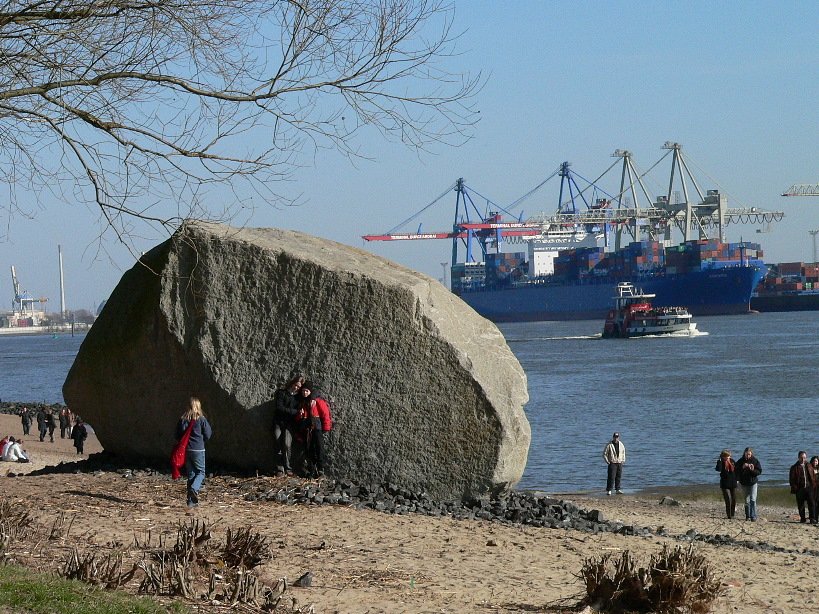
If you visit the banks of the Elbe in Hamburg-Övelgönne, you can actually meet a literal “Alter Schwede”. In 1999, workers dredging the riverbed discovered a massive 217-ton erratic boulder. Geologists determined that the rock is a Monzogranite that originated in Småland, Sweden, and was transported to Germany by glaciers over 320,000 years ago. On 6 June 2000, the 1.8-billion-year-old rock was officially “naturalised” and named Alter Schwede in honour of the famous saying.
Swedish Legacy in the German Language
“Alter Schwede” isn’t the only phrase that survived the Thirty Years’ War. The expression “hinter schwedischen Gardinen sitzen” (to sit behind Swedish curtains) means to be in prison; this refers to the high-quality Swedish steel that was famously used to make durable window bars.
So, the next time you’re shocked by a piece of news, feel free to channel your inner 17th-century corporal and shout, “Alter Schwede!” Just maybe avoid saying it to your boss unless you’re sure they have a great sense of humour.
–
sources: Kultürlich, Elchkuss






#/media/Datei:Findling.Alter_Schwede.wmt.jpg)